


Blepharoplasty in Panama: what it solves, what it does not, and what recovery is like
Eyelid surgery is one of the most requested procedures and also one of the most misunderstood. What it actually corrects, who is a good candidate and what to expect from recovery.
By Dr. Miguel Ángel Olivardía Moreno · · Updated 3 de agosto de 2026
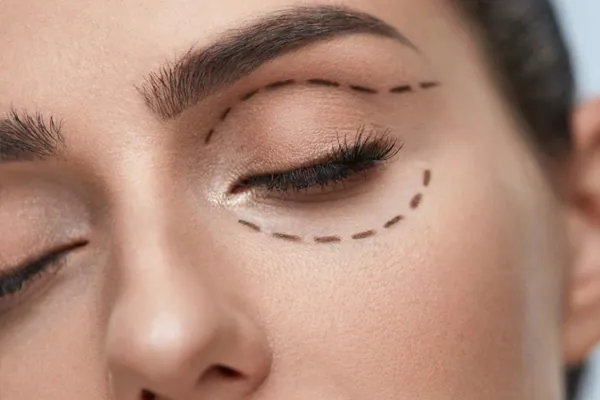
Blepharoplasty is the surgery that corrects excess skin and the fat bags of the eyelids. It is one of the procedures most frequently requested in clinic and, at the same time, one that patients arrive at with the most mistaken expectations.
This article tries to set out what it really solves, what it does not, and what going through it involves.
Functional or cosmetic: the distinction that matters
Over the years, the skin of the upper eyelid loses elasticity and accumulates. When that excess is great enough, it stops being a matter of appearance and starts to obstruct the upper visual field. Patients describe it in curious ways: «my eyes get tired when I read», «I have to raise my eyebrows to see properly», «by the end of the day my eyelids feel heavy».
In those cases blepharoplasty is functional surgery, and it is documented as such: with clinical photography and a visual field test demonstrating the obstruction. That documentation is also what makes it possible to arrange cover with an insurer.
Where there is no demonstrable obstruction, the indication is cosmetic. Both are legitimate; what changes is how it is planned and who pays for it.
Upper, lower, or both
Upper eyelid. The excess skin is removed and, where appropriate, a portion of fat. The incision is placed in the natural eyelid crease, which means the scar is hidden when the eye is open.
Lower eyelid. The problem here is usually protrusion of the fat pads rather than skin. Depending on the case it can be approached transconjunctivally — with no external incision — or externally when there is also excess skin to remove.
What blepharoplasty does not do
This part of the conversation is what prevents disappointment:
- It does not correct ptosis. If the eyelid is drooping because the levator muscle is not working properly, removing skin will not lift it. They are two different problems with two different operations, although they can be done in the same procedure.
- It does not correct a dropped brow. Sometimes what looks like excess eyelid skin is in fact a descended eyebrow. Operating on the eyelid in that case gives a poor result.
- It does not remove dark circles. Pigmentation of the skin and the shadow of the tear trough have other causes and other treatments.
- It does not remove expression lines at the outer corner.
That is why the preoperative assessment spends time distinguishing which of these problems — or which combination — the patient actually has.
Who is a good candidate
In general terms, someone in good general health, with realistic expectations and no active eye disease that would contraindicate the procedure.
There are conditions that call for particular caution and are always assessed beforehand:
- Significant dry eye. Blepharoplasty can worsen it temporarily. If the dry eye is severe, it is best treated first.
- Active thyroid disease. Thyroid eye disease changes the approach entirely; operating on an unstabilised condition is a mistake.
- Clotting disorders or anticoagulant use, managed in coordination with the treating physician.
What recovery is like
Most cases are performed as a day case, under local anaesthetic with sedation. The patient goes home the same day.
First 48–72 hours. Cold compresses, head elevated and relative rest. Swelling and bruising peak around the third day. It is the phase that looks most alarming and the one most worth anticipating.
Days 5 to 7. Stitches out. Appearance improves markedly from here.
Weeks 1 to 2. Most patients return to their usual activity. Strenuous exercise and direct sun exposure are avoided.
From one month on. The scar goes on maturing and the result refines progressively over several more weeks.
A note about the sun in Panama
Ultraviolet radiation is high all year round, and a fresh scar is especially prone to hyperpigmentation. Sun protection over the operated area, together with sunglasses, is part of real aftercare and not a decorative piece of advice.
What to take away from this
Blepharoplasty gives very satisfying results when the diagnosis is precise: that is, when what is operated on is genuinely the problem the patient has. The preoperative consultation is not an administrative formality; it is where it is decided whether this surgery is the right one, whether it needs combining with another, or whether the problem was something else all along.