






Subspecialty
Oculoplastic Surgery in Panama
Oculoplastics is the subspecialty that joins ophthalmology to the reconstructive and cosmetic surgery of the area surrounding the eye. It has been the core of my practice since 2003.
What oculoplastics is
It is a Subspecialty of Ophthalmology devoted to the study and management of disease of the orbit — the bony cavity that houses the eyeball — of the eyelids and of the tear ducts.
It is a particular territory within medicine: the work is done on structures that at once protect the eye, keep the cornea lubricated and make up much of the expression of the face. That is why almost no procedure here is purely functional or purely cosmetic. Correcting a drooping eyelid gives back visual field and, at the same time, changes the look of the face.
What is treated
Orbit
The orbit can be affected by inflammatory processes, benign and malignant tumours, and by thyroid eye disease, the ocular manifestation of thyroid disease that produces protrusion of the eye, eyelid retraction and, in severe cases, compromise of the optic nerve.
Loss of the eyeball and its rehabilitation for cosmetic purposes also belongs here: implants and ocular prostheses are used to restore volume and symmetry to the face.
Eyelids
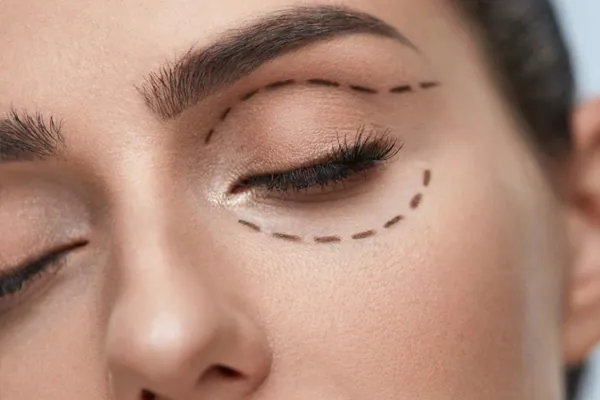
Malpositions (ptosis, ectropion, entropion), eyelid tumours, sequelae of trauma, facial palsy and cosmetic surgery. In eyelid tumours the aim is twofold: to excise the lesion with clear margins and to reconstruct the eyelid so that it goes on doing its protective job.
Tear ducts
Every problem of tear drainage is treated, in children and adults alike: congenital obstruction of the nasolacrimal duct in the newborn, infectious and inflammatory disease of the lacrimal sac, and acquired obstruction in the adult that causes permanent watering.
Ocular surface and oncology
Tumours and neoplasms of the eyelids, orbit and surface of the globe are managed with surgery that removes the disease and reconstructs the defect, seeking the best functional and cosmetic result possible in each case.
How the process works
- Assessment. Clinical history, a complete eye examination and, depending on the case, imaging (orbital ultrasound, CT or contrast MRI), visual field testing or biopsy.
- Surgical plan. What is going to be done is explained, with what anaesthesia, what result is reasonable to expect and what the specific risks of that procedure are.
- Surgery. Most eyelid surgery is day-case, under local anaesthetic with sedation.
- Follow-up. Scheduled postoperative check-ups. In tumour disease, follow-up is long and close, because the main complication of these lesions is recurrence.
Frequently asked questions
What is the difference between a general ophthalmologist and an oculoplastic surgeon?
A general ophthalmologist looks after your whole visual health. An oculoplastic surgeon is an ophthalmologist who also completed a two-year subspecialty in surgery of the eyelids, orbit and tear ducts. When the problem lies in the structures surrounding the eye, that additional training matters: the operating field is very close to the globe and to the visual pathway.
Is eyelid surgery cosmetic or functional?
It can be either, and it is frequently both. A blepharoplasty for excess skin that is already blocking the upper visual field is functional; the same technique in a patient with no obstruction is cosmetic. At the consultation your visual field is documented in order to establish which of the two situations applies to you.
How long does recovery take?
It depends on the procedure. In eyelid surgery, swelling and bruising peak between the second and third day, and most patients return to their usual activity within one or two weeks. Stitches are normally removed at 5–7 days. The final result becomes apparent after several weeks.
Is it done under general anaesthetic?
Most eyelid surgery is performed under local anaesthetic with sedation, as a day case. Orbital surgery and extensive reconstructive cases do usually require a general anaesthetic. This is decided case by case and explained before scheduling.
Do you need care for oculoplastic surgery?
Book online or call whichever practice is easiest for you.