





Blepharoplasty in Panama with an oculoplastic eye surgeon
Blepharoplasty removes excess skin and the bags from the eyelids. When it is done by an oculoplastic eye surgeon, the assessment starts with the eye: with the visual field that has been lost, and with the ocular surface that has to stay protected afterwards.
What blepharoplasty is
Blepharoplasty is the surgery that removes excess skin, muscle and fat from the eyelids. It is one of the procedures most often requested for cosmetic reasons, and also one of those that most frequently has a functional reason behind it: when upper eyelid skin hangs low enough, it blocks part of the visual field.
That dual nature is what makes it worth operating on from within ophthalmology. The eyelid is not just a fold of skin: it is what protects the cornea and what spreads the tear film with every blink.
What it can correct
- Excess upper eyelid skin falling over the lashes
- A feeling of heaviness, or having to raise the eyebrows in order to see
- A reduced visual field above and to the sides
- Lower eyelid bags
- A permanently tired appearance that does not match how the person feels
Upper blepharoplasty
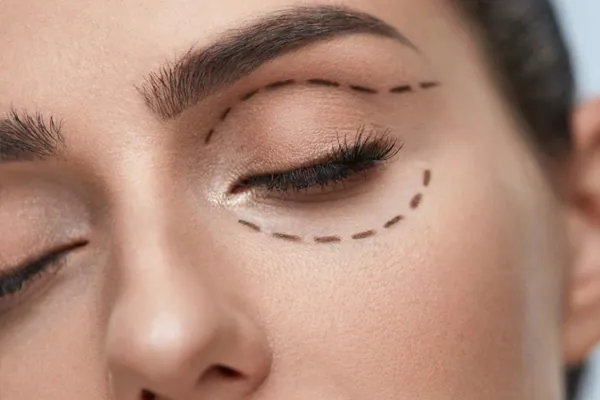
This is the one that works on the upper lid. The incision is placed in the natural crease of the eyelid, so that the scar is hidden when the eye is open. The excess skin is removed and, where appropriate, a portion of muscle or fat.
This is the one most often with a functional indication, because it is the one that gives back visual field.
Lower blepharoplasty
This works on the bags of the lower lid. Depending on the case, the approach may be through the inside of the eyelid — with no visible scar — or just below the lashes when there is also skin to remove.
The lower eyelid is less forgiving than the upper one: taking too much leaves the lid pulled away from the globe, with watering and corneal exposure. That is why restraint here matters more than quantity.
Functional or cosmetic
The distinction is not made by the technique but by the reason:
- Functional, when the excess skin reduces the visual field and surgery gives it back. This is a medical indication and can be documented with a visual field test.
- Cosmetic, when vision is not compromised and the aim is to rest the look of the eyes.
In practice many cases are both at once. It is worth clarifying from the first consultation, because how the surgery is planned — and what can be expected from an insurer — depends on it.
Excess skin and ptosis are not the same thing
This is the distinction that most changes the result, and the one most often overlooked.
In dermatochalasis there is too much skin: the eyelid itself works, but the fold hangs over it. In eyelid ptosis the problem is in the muscle that lifts the eyelid, and it is the eyelid margin itself that has dropped.
They look alike from the front, but they are corrected with different operations. Performing a blepharoplasty on an undiagnosed ptosis removes skin and leaves the eyelid just as droopy. You can read more about this in the article on ptosis or drooping eyelid.
Who may be a candidate
Generally, anyone with excess skin or bags that bother them functionally or cosmetically, with stable general health and realistic expectations about what surgery can change.
There are situations that do not rule out surgery but do change the plan: pre-existing dry eye, previous refractive surgery, thyroid disease, facial palsy or a history of eyelid surgery. All of them are assessed beforehand, not during.
Why the ocular surface is assessed before surgery
This is the point that separates a blepharoplasty done from within ophthalmology from one done without looking at the eye.
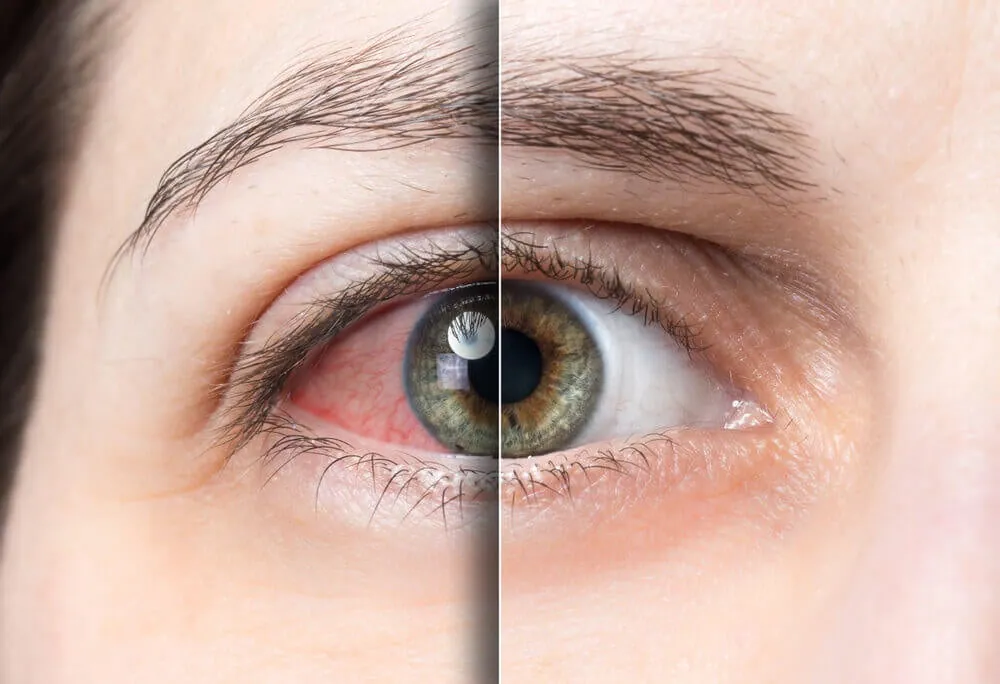
Removing skin from the eyelid changes how the eye closes and, with it, how the tear film is distributed. In someone who already has dry eye — very common and often undiagnosed — surgery can markedly worsen the burning and gritty sensation.
That is why the assessment examines the tear film, the eyelid margin and eye closure before deciding how much skin can be removed. Sometimes the conclusion is to treat the ocular surface first and operate afterwards.
How it is done
It is usually performed under local anaesthetic with sedation, as a day case. Marking is done with the patient sitting up and awake.
Afterwards, cold compresses are applied for the first few days. Swelling and bruising are the rule, not a complication: most of it settles within one or two weeks, and the result consolidates over the following months.
Why with an oculoplastic eye surgeon
Because oculoplastics is the ophthalmology subspecialty devoted to precisely this: eyelids, orbit and tear ducts. The training starts with the eye and then moves out to what surrounds it, in that order.
That means that at the same consultation the visual field, the ocular surface, the eyelid position and the function of the levator muscle are all assessed — the four things that determine whether the result is good a year later and not just in the first week.
Training
I am a subspecialist in Orbit, Eyelids and Lacrimal System, trained at the Asociación para Evitar la Ceguera in Mexico, and oculoplastics has been the core of my practice since 2003. You can see my full career history.
If you are looking for general information before deciding, the article on blepharoplasty covers recovery and expectations in more detail.
Frequently asked questions
Is blepharoplasty cosmetic or functional?
It can be either, and it is frequently both at once. It is functional when excess upper eyelid skin reduces the visual field, something that can be documented with a test; it is cosmetic when vision is not compromised and the aim is to rest the look of the eyes. The technique is the same: what changes is the indication.
How is it different from ptosis correction?
In blepharoplasty there is excess skin and the eyelid works; in ptosis it is the levator muscle that fails to lift the eyelid margin properly. From the front they look alike, but they are corrected with different operations. Performing a blepharoplasty on an undiagnosed ptosis removes skin and leaves the eyelid just as droopy, so the distinction is made before going into theatre.
Why is dry eye checked before surgery?
Because removing skin from the eyelid changes how the eye closes and how the tear film is spread. In someone who already had dry eye, often without knowing it, surgery can worsen the burning and gritty sensation. Assessing it beforehand makes it possible to adjust how much skin is removed, or to treat the ocular surface first and operate later.
Will there be visible scars?
On the upper eyelid the incision sits in the natural crease, so it is hidden when the eye is open. On the lower lid, depending on the case, the approach can be through the inside of the eyelid with no external scar. Eyelid scars usually mature well because eyelid skin is the thinnest in the body, although the process takes months.
When can I go back to normal life?
Swelling and bruising are to be expected and mostly settle within one or two weeks. Desk work is usually resumed before strenuous exercise or sun exposure. The final result consolidates over the following months, not by the first check-up.
Do you need care for blepharoplasty?
Book online or call whichever practice is easiest for you.