




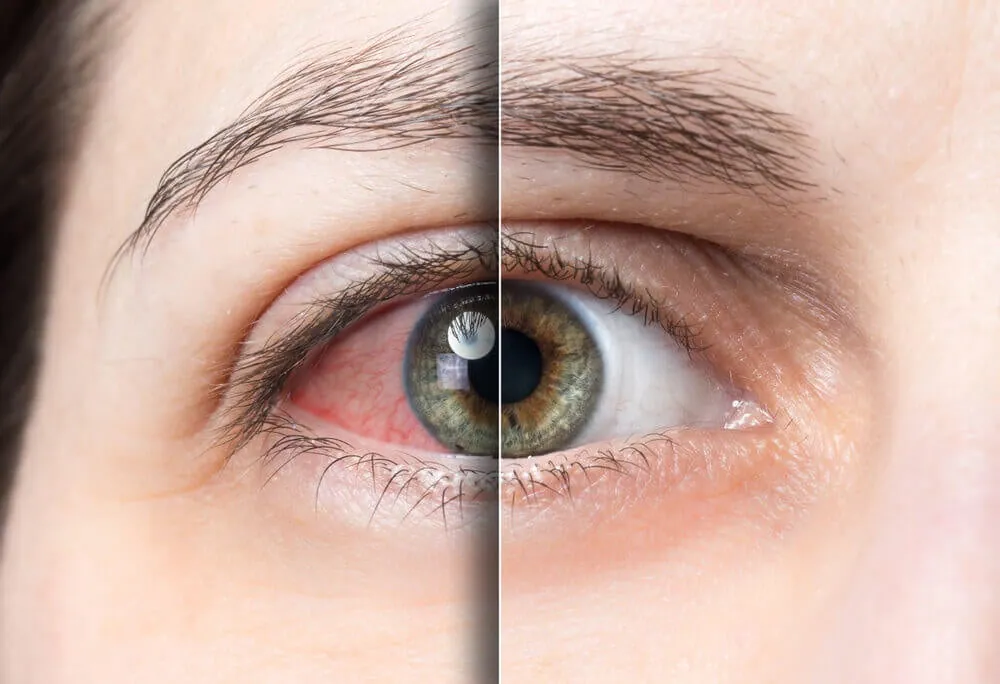
Subspecialty
Ocular Oncology and Tumours of the Eyelid and Orbit
Not every lesion that appears on the eye or the eyelid is a tumour, but every lesion that grows, bleeds or distorts the eyelid margin needs to be assessed. Early diagnosis changes the outlook completely.
An area where time counts
Tumours of the eyelid, the conjunctiva and the orbit share an uncomfortable trait: at the start they look a great deal like trivial problems. A basal cell carcinoma can look like a small crust that never quite heals. Ocular surface squamous neoplasia can be mistaken for a pterygium. A sebaceous carcinoma can mimic a recurrent chalazion for months.
That is why I insist so much on assessing lesions that «are nothing»: the difference between a small excision with straightforward reconstruction and extensive surgery is usually the time that passed before the first biopsy.
What is assessed at the consultation
- Slit-lamp examination of the eyelids, conjunctiva, cornea and ocular surface, including eyelid eversion.
- Photographic documentation of the lesion, so that it can be compared objectively over time.
- Imaging when orbital or intraocular extension is suspected: ultrasound, CT or contrast MRI.
- Biopsy with histopathology, which is the only thing that gives a definitive diagnosis.
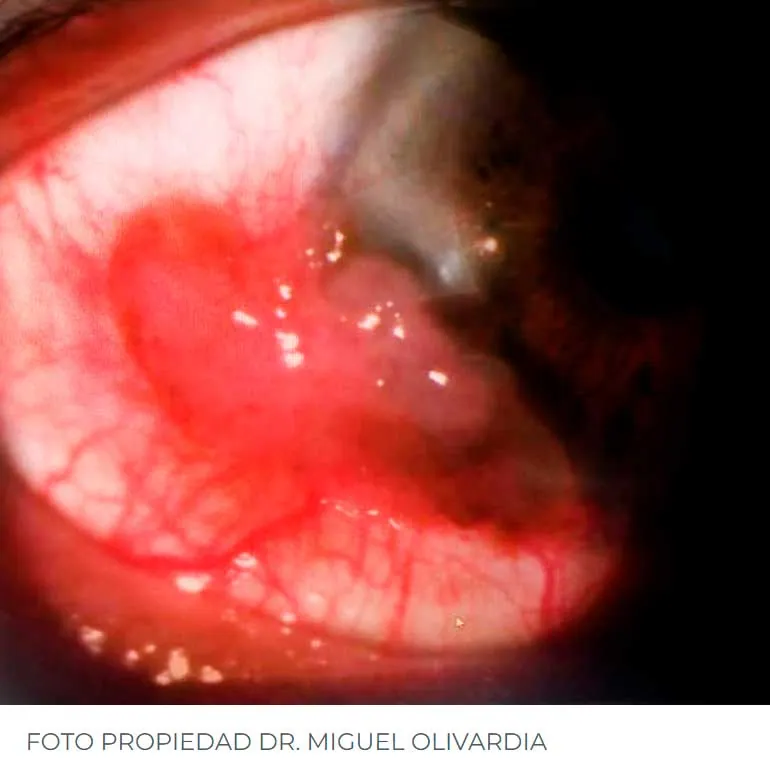
Own case. Result after excisional biopsy, absolute alcohol, cryotherapy and amniotic membrane graft, followed by topical chemotherapy. Photograph the property of Dr Miguel Olivardía.
Treatment
Treatment depends on the type of tumour, its size and its depth. The usual tools include controlled resection of the lesion, cryotherapy as adjuvant management, topical chemotherapy (mitomycin-C or 5-fluorouracil) in selected ocular surface cases, and reconstruction of the resulting defect.
In lesions with intraocular or orbital invasion the approach changes and may require major procedures, which are discussed in detail with the patient and their family before any decision is taken.
The outlook for most of these tumours is reasonably good when excision is complete. The variable with the greatest influence on that outcome is when the diagnosis was made.
Training in this field
I am a member of the Pan-American Ocular Oncology Society, the International Society of Ocular Oncology and the Pan-American Association of Ophthalmology. I completed my subspecialty in orbit, eyelids and lacrimal system at the Asociación para Evitar la Ceguera in Mexico (APEC), Hospital «Dr. Luis Sánchez Bulnes», a regional referral centre for this pathology.
Frequently asked questions
How do I tell an ordinary stye from something more serious?
A typical stye or chalazion appears, hurts for a few days and shrinks with warm compresses and treatment. What should raise suspicion is the lesion that always comes back in exactly the same spot, the one that destroys the eyelid margin, the one that causes loss of eyelashes in that area, or the one that bleeds easily. In those cases what is called for is a biopsy, not another course of treatment.
Why is there more skin cancer around the eyes in Panama?
Because of ultraviolet radiation. Panama lies close to the equator, with high irradiance all year round, and much of the exposure happens during everyday outdoor activity. Eyelid skin is the thinnest in the body and receives that exposure cumulatively over decades.
If an eyelid tumour is removed, how will my eye look?
Excision and reconstruction are planned together. First a tumour-free margin is secured; then the eyelid is rebuilt with your own tissue so that it keeps its closing and corneal-protection function. The result depends on the size of the defect, and what is reasonable to expect is explained to you before surgery.
Does follow-up end once the tumour is removed?
No. The main complication of these lesions is recurrence, which usually appears during the first year after excision, although it can present later. That is why follow-up is scheduled and prolonged, even when the surgery was complete and the margins were clear.
Do you need care for ocular oncology?
Book online or call whichever practice is easiest for you.