


Glaucoma and Cataracts
Cataracts and glaucoma can both cause loss of vision, but they behave in opposite ways: the loss caused by a cataract is almost always recovered; the loss caused by glaucoma is, to this day, irreversible.
What each one is
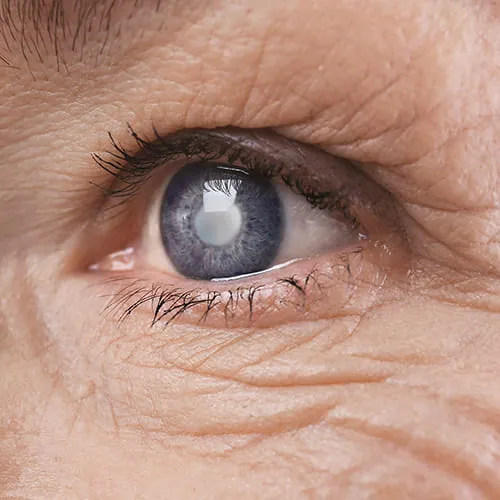
A cataract is a condition of the eye in which clouding of the lens is affecting vision, either in quantity or in quality.
Glaucoma is an eye disease that narrows the visual field, without warning and without symptoms. The loss of vision is caused by the damage that excessive intraocular pressure does to the optic nerve.
The difference that matters
Cataracts and glaucoma can both cause loss of vision; however, the loss due to cataract can be reversed with surgery, whereas the loss due to glaucoma is, so far, irreversible.
That asymmetry defines the whole clinical strategy. With a cataract we can wait and operate when the patient needs it. With glaucoma, waiting means losing ground permanently.
Cataract surgery
Cataract surgery is suggested when a person's vision has been reduced to the point where it interferes with their usual daily tasks, whether through a reduction in the quantity or in the quality of vision.
Unlike the loss of vision due to glaucoma, the loss due to cataract can almost always be recovered. In most cases the clouded lens is removed and replaced with a clear one by implanting an intraocular lens (IOL).
Who should be screened for glaucoma
- People over 40, as part of a periodic check-up.
- A direct family history of glaucoma.
- High myopia.
- Prolonged use of corticosteroids.
- A history of ocular trauma.
- Poorly controlled diabetes or high blood pressure.
Frequently asked questions
Why is glaucoma detected so late?
Because it progresses without warning and without symptoms. The damage starts in the peripheral vision, and the brain fills in what is missing using information from the other eye. By the time the patient notices lost visual field, the disease has been at work for some time. That is why diagnosis depends on examination, not on symptoms.
When is a cataract operated on?
Surgery is suggested when a person's vision has been reduced to the point where it interferes with their usual daily tasks, whether through a reduction in the quantity or the quality of vision. It is not a decision that rests on a single number: it depends on how that vision is affecting your life.
Does vision lost to glaucoma come back after treatment?
No. Glaucoma treatment — drops, laser or surgery — aims to halt progression, not to recover what has been lost. That is precisely the argument for diagnosing it early: every month of delay is visual field that does not return.
Can you have both at the same time?
Yes, and it is common in older patients. They are assessed and treated together, because cataract surgery can alter intraocular pressure and because clouding of the lens makes it harder to assess the optic nerve and the visual field properly.
Do you need care for glaucoma and cataracts?
Book online or call whichever practice is easiest for you.